
When Pain Won’t Quit After a Brain Injury: Why Ketamine Infusion for Chronic Pain May Be the Answer You’ve Been Searching For
Every recommended step was followed with care, from rest to therapy and multiple specialist visits. Despite these efforts, headaches and neck pain continued, quietly shaping daily life. Conversations about pain became muted as reactions from others often fell short of understanding. Post-injury central sensitization explains why symptoms persist and why solutions may require targeted approaches.
Ketamine infusion for chronic pain is emerging as an important option in clinical care. Its growing attention reflects its potential to reach patients whose symptoms remain active despite standard treatment. Understanding ketamine infusion for chronic pain can help clarify how it works and why it may provide meaningful relief.
Why Brain Injury Pain Doesn’t Behave Like Other Pain
After a traumatic or acquired brain injury, the nervous system can maintain altered pain-processing patterns long after the visible injury has healed. Central sensitization occurs when the brain amplifies ordinary signals, interpreting touch, temperature, or movement as persistent pain. This neurological change reflects a rewiring of pathways.
Traditional pain treatments, including NSAIDs, opioids, muscle relaxants, and physical therapy, target peripheral injuries and localized pain. Ketamine infusion therapy addresses this underlying neurological problem, offering a pathway to recalibrate pain-processing circuits effectively.
When You’ve Tried Everything (And You Actually Have)
Every recommended step was followed with care, from rest to therapy and multiple specialist visits. Despite these efforts, headaches and neck pain continued, quietly shaping daily life. Conversations about pain became muted as reactions from others often fell short of understanding. Post-injury central sensitization explains why symptoms persist and why solutions may require targeted approaches.
Ketamine infusion for chronic pain is emerging as an important option in clinical care. Its growing attention reflects its potential to reach patients whose symptoms remain active despite standard treatment. Understanding ketamine infusion for chronic pain can help clarify how it works and why it may provide meaningful relief.
How Ketamine Actually Works on Pain Like Yours
Ketamine targets the brain’s pain and mood pathways in a way that differs from traditional medications, offering relief for stubborn or treatment-resistant pain.
The NMDA Receptor Problem
At the core of central sensitization is an overactive receptor in the nervous system called the NMDA receptor. It acts like a pain amplifier stuck in the “on” position, making normal sensations feel painful. Standard pain medications don’t target this receptor directly, which is why relief can be limited. Ketamine, as an NMDA receptor antagonist, blocks these signals and interrupts the loop that keeps pain alive even without new injury.
A Nervous System Reset
IV ketamine may help recalibrate the broader pain-processing pathways in the brain and spinal cord. Many patients describe this effect as a quieting, like a volume knob being turned down on a signal that has been deafening. By modulating neural activity, ketamine gives the nervous system a chance to reset. This reset can change how pain is perceived, making previously persistent sensations more manageable.
Neuroinflammation Reduction
Chronic pain after injury often involves ongoing neuroinflammation that amplifies pain signals. Ketamine demonstrates anti-inflammatory properties that target these underlying drivers. By reducing this low-grade inflammatory activity, this combined effect helps explain why ketamine infusion can provide relief when other treatments fail.
What Treatment Looks Like at Fresh Start Ketamine in Raleigh
Fresh Start Ketamine, located at 811 Spring Forest Road, Suite 1400 in Raleigh, was built around one thing: ketamine therapy.
That distinction matters. When a clinic specializes exclusively in ketamine, the protocols are tighter, the staff more experienced, and the attention to individual patient needs more consistent. For a population that has already been passed around a healthcare system that didn’t quite know what to do with them, that specificity is reassuring.
Here’s what to expect:
- Personalized dosing based on your condition, body weight, and medical history
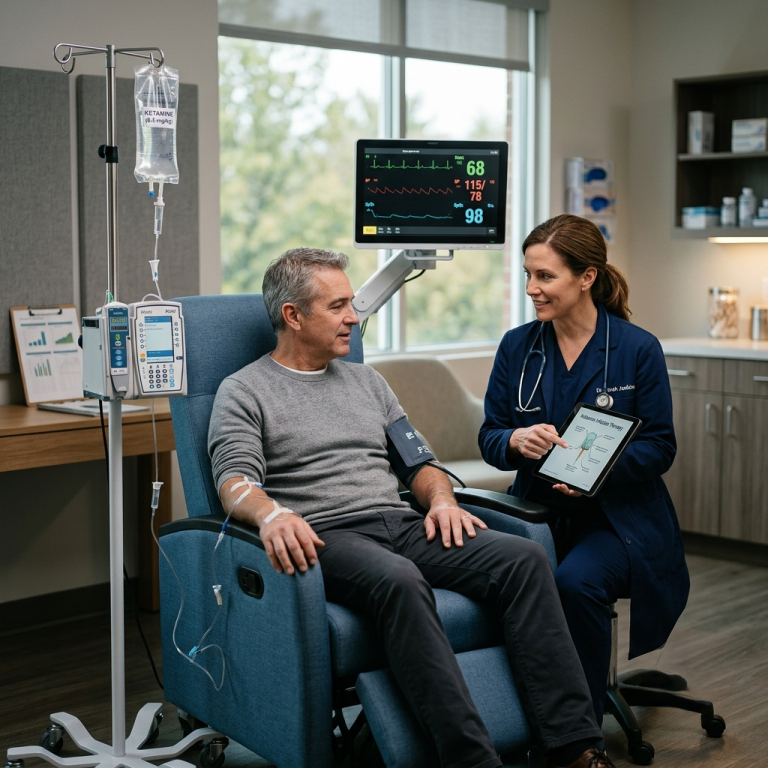
- Sessions lasting approximately 40–60 minutes in a comfortable, monitored setting designed to support a calm, controlled experience
- A series of infusions for optimal long-term results, because a single session rarely captures the full therapeutic potential
- Around-the-clock access for questions and support between sessions because pain doesn’t keep office hours, and neither should your care team
- Advanced protocols that prioritize safety and efficacy above all else
Fresh Start Ketamine works with patients experiencing chronic pain, neuropathic pain, CRPS, and fibromyalgia conditions that map directly onto the post-injury pain profile described throughout this article.
It’s a Different Road
Exploring treatments that address the neurological roots of chronic pain encourages clarity and renewed hope. Ketamine infusion interacts with central nervous system pathways to help patients find meaningful relief. Fresh Start Ketamine in Raleigh offers consultations to discuss history, options, and individualized approaches. Call (919) 999-6793 or visit 811 Spring Forest Road, Suite 1400, Raleigh to schedule a consultation.
Taking intentional steps toward pain management empowers patients to regain control and confidence. Guidance from an experienced team ensures care aligns with unique needs. Every conversation provides insight and support for informed decisions. Fresh Start Ketamine focuses on providing care that nurtures a stronger connection with overall well-being.