
Why Ketamine Therapy for Chronic Pain Is Giving Post-Concussional Headache Patients Their Lives Back
Weeks of rest and careful monitoring passed, yet headaches persisted, and tracking them became exhausting. Everyday lights, sounds, and conversations triggered intense discomfort, while scans remained normal and doctors offered measured guidance. Support from others faded as the struggle continued quietly. Post-concussional headache is a condition that remains underrecognized yet increasingly understood in research.
Ketamine therapy for chronic pain is generating attention for its ability to address lingering post-concussional symptoms. Clinical results suggest it can provide meaningful relief where conventional treatments fall short. Learning how ketamine therapy for chronic pain works can guide informed decisions for recovery.
Why Post-Concussion Headaches Do Not Follow the Rules
Post-concussion headaches often defy typical patterns, making them unpredictable and resistant to standard treatments. Their underlying causes can vary widely, requiring a more individualized and flexible approach to care.
Two mechanisms drive the persistence of post-concussional headaches more than any others:
Central Sensitization
Central sensitization occurs when the brain’s pain-processing system stops calibrating correctly. After a concussion, the nervous system can become hyperresponsive, amplifying signals that a healthy brain would normally filter out. Ordinary input starts to feel threatening, sustaining a pain response that has lost any connection to tissue damage. The headache you feel is no longer about the original injury; it is about a nervous system that has learned to stay in pain without knowing how to stop.
Neuroinflammation
Neuroinflammation keeps this cycle running by maintaining low-grade inflammatory activity in the brain’s pain pathways. Unlike the swelling of an acute injury, this inflammation is subtle and persistent, quietly sustaining sensitization long after the concussion has healed. You won’t see it on conventional scans, which makes it easy to miss. This hidden dysregulation is why many post-concussion patients leave neurology appointments feeling dismissed.
Standard headache treatment addresses the symptom while the sensitized system producing it continues running underneath.
How Ketamine Works on Post-Concussion Headaches
NMDA Receptor Blocking: Interrupting the Signal at the Source
Central sensitization involves an overactive NMDA receptor that keeps chronic pain switched on independent of any ongoing injury. Ketamine works as an NMDA receptor antagonist, blocking this signal at its neurological source. That persistent baseline pressure, the one that starts before you have even gotten out of bed, comes from NMDA receptor misfiring. Ketamine therapy for chronic pain is designed to interrupt it.
Nervous System Reset: Recalibrating Dysregulated Activity
Ketamine modulates activity across the brain and spinal cord in a way that helps recalibrate the entire pain-processing architecture. Patients describe this as quieting, a reduction in the baseline volume of pain that has become constant and identity-defining. The nervous system may be capable of learning a new default given the right intervention.
Neuroinflammation Reduction: Addressing the Cycle
Research shows ketamine may reduce neuroinflammation associated with chronic pain syndromes, targeting one of the key drivers of persistent post-concussional symptoms that conventional treatment cannot reach. For patients whose headaches have an inflammatory component, this mechanism matters in ways that symptom-management approaches cannot replicate.
Migraine-Specific Mechanism
Many post-concussion patients develop headaches that present like migraines: photophobia, phonophobia, throbbing, nausea, even with no prior migraine history. Ketamine targets NMDA receptors in a way that aids the regulation of pain along these pathways, relevant to migraine-type symptoms that so many post-concussion patients experience daily.
Each mechanism maps directly onto the pathology described above. This explains why headaches persist and why ketamine addresses them.
When Conventional Options Have Been Exhausted
Patients who explore ketamine therapy for chronic pain often have extensive treatment histories: neurology, headache specialists, physical therapy, pain management, occipital nerve blocks, dietary changes, sleep hygiene protocols, preventive medications, abortive medications, and second opinions.
It reflects a mismatch between conventional treatment and the underlying pain mechanism. Treatments designed for peripheral pain or episodic headaches addressed different pathologies.
For patients with neuropathic and treatment-resistant headaches, ketamine therapy represents a clinically appropriate escalation. It is a targeted intervention applied where other options have shown limits.
What Ketamine Infusion Therapy Looks Like at Fresh Start Ketamine
Fresh Start Ketamine, at 811 Spring Forest Road, Suite 1400 in Raleigh, NC, focuses entirely on ketamine therapy. Fresh Start places it at the center of care.
Treatment includes:
- Personalized dosing based on condition, medical history, and body weight
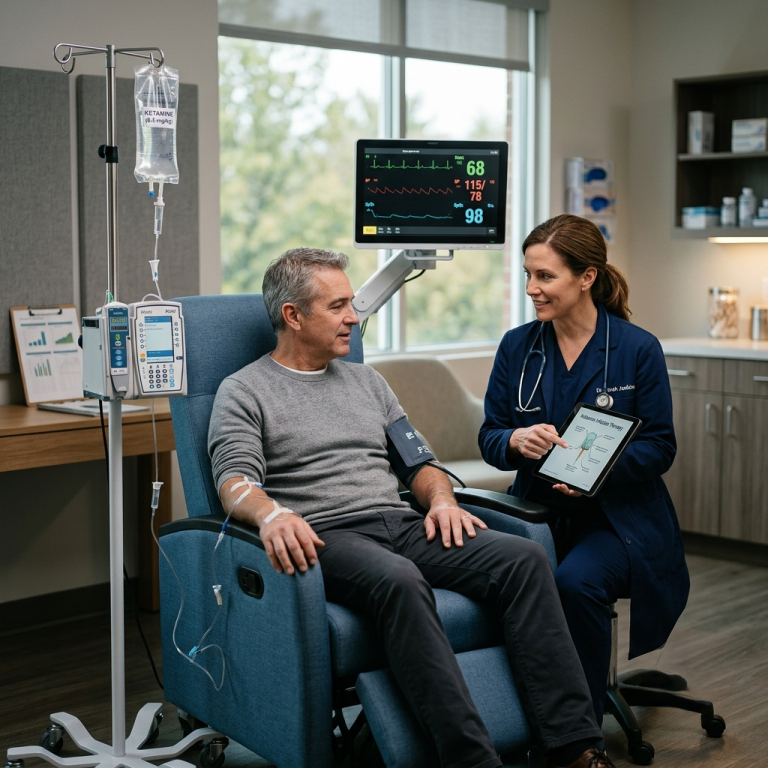
- Sessions lasting 40 to 60 minutes in a comfortable, medically monitored setting
- A series of infusions structured for optimal long-term outcomes
- Round-the-clock access between sessions for questions, concerns, and scheduling
- Advanced protocols designed with safety and clinical efficacy as dual priorities
For Triangle-area patients who have run out of options, Fresh Start offers a specialized team with protocols to match.
Some Headaches Require a Different Kind of Answer
For patients managing post-concussional headaches, you deserve a clinical option that addresses the problem deeply. Ketamine therapy for chronic pain may be suitable for patients whose headaches are neurologically rooted, treatment-focused, and supported by a sensitized system.
Fresh Start Ketamine invites patients to start with a consultation, a conversation about history, presentation, and whether this approach is appropriate.
Call (919) 999-6793 or visit Fresh Start Ketamine at 811 Spring Forest Road, Suite 1400, Raleigh, NC 27609.
Your headache has a mechanism. There may finally be a treatment designed to reach it.