
What Most People Get Wrong About Ketamine for PTSD — And Why It’s Changing Lives in Raleigh
Ketamine for PTSD works, and it works through a fundamentally different mechanism than anything most patients have tried before. Unlike SSRIs or traditional talk therapy, IV ketamine infusions target the brain’s glutamate system, resetting the neural pathways that trauma disrupts.
At Fresh Start Ketamine in Raleigh, NC, adults living with PTSD and Complex PTSD are accessing this treatment after years of insufficient relief from conventional approaches. What’s keeping others from doing the same isn’t the evidence; it’s the misinformation.
Skepticism about ketamine is understandable. The drug carries a complicated public history, and the gap between what people assume about it and what clinical research actually shows is wide enough to keep genuinely good candidates from exploring a treatment that could meaningfully change their lives. This article closes that gap, myth by myth, mechanism by mechanism.
Myth: Ketamine for PTSD Is Still Experimental
It isn’t. Ketamine has been an FDA-approved anesthetic for over 50 years, with a clinical track record that predates most of the medications currently prescribed for PTSD. Its application in treating mood disorders and trauma-related conditions is supported by a substantial and growing body of peer-reviewed research, replicated outcomes showing significant symptom reduction, often within hours to days of a first infusion.
The off-label designation that sometimes fuels the “experimental” label refers to regulatory classification. A treatment can be off-label and thoroughly evidence-supported at the same time. Ketamine for PTSD is exactly that.
The mechanism matters here. Ketamine works by blocking NMDA receptors in the brain’s glutamate system. This prompts a neurological reset of the pathways that chronic or acute trauma dysregulates, pathways that SSRIs, which target serotonin, don’t directly address. It’s not that SSRIs are wrong; it’s that they operate on a different system entirely. For patients whose PTSD has not responded to serotonin-based treatments, this distinction is clinically significant.
At Fresh Start Ketamine in Raleigh, protocols for PTSD treatment are built around this mechanism, the reproducible science of how ketamine interacts with a traumatized brain.
Myth: Ketamine Therapy Is Only for Veterans or the Most Severe Cases
Veterans and first responders represent a meaningful portion of people living with PTSD, and ketamine therapy has shown strong outcomes in these populations. But PTSD is not a condition exclusive to military service or crisis response. It develops after domestic violence, childhood abuse, serious accidents, medical trauma, loss, and any experience the nervous system cannot fully process and move past.
Complex PTSD (C-PTSD) — which results from prolonged or repeated trauma rather than a single acute event is also treated at Fresh Start Ketamine, and it responds well to ketamine’s neuroplasticity-promoting mechanism. The threshold for candidacy isn’t based on the severity of the trauma type. It’s whether PTSD is present and whether conventional treatment has failed to provide adequate relief.
If you’re living with PTSD symptoms, hypervigilance, intrusive memories, emotional dysregulation, dissociation, persistent avoidance, and what you’ve tried so far hasn’t been enough, the question of whether ketamine therapy is appropriate for your situation is worth exploring. That determination happens in a consultation.
Myth: Ketamine Only Provides Short-Term Relief
This is the most persistent misconception, and it stems from a misunderstanding of what the dissociative experience during a session is versus what the therapy actually produces.
The altered state that occurs during a ketamine infusion is a side effect of the drug’s action. The treatment is what happens neurologically in the hours, days, and weeks that follow. Specifically, ketamine stimulates the production of BDNF (brain-derived neurotrophic factor), a protein that supports the growth and repair of neural connections. In a brain affected by trauma, where chronic stress has degraded synaptic pathways, BDNF activity is part of how ketamine promotes the formation of new, healthier neural architecture.
That process is not temporary, as a pain reliever wears off. Many patients report symptom relief lasting weeks to months following a series of infusions. Some require periodic booster sessions to sustain results, a standard feature of individualized treatment planning. The goal at Fresh Start Ketamine is a durable neurological change.
Myth: Ketamine’s Recreational History Makes It Medically Suspect
Ketamine has been misused recreationally. That fact is not in dispute, and it doesn’t change the clinical picture.
Many substances with well-established medical applications carry histories of misuse. Clinical legitimacy is determined by whether it can be administered safely and effectively in a controlled setting. Ketamine can. At Fresh Start Ketamine, IV infusions are delivered by trained medical professionals in a monitored clinical environment. Dosing is individualized and precisely calculated. The dissociative experience associated with recreational, high-dose ketamine is categorically distinct from the lower-dose, medically supervised infusion experience.
The setting is everything. What happens in a clinical environment, with a calibrated dose, continuous monitoring, and a structured protocol, has almost nothing in common with uncontrolled recreational use except the name of the compound. Treating them as equivalent is the mistake the myth makes.
What Ketamine for PTSD Actually Looks Like in Raleigh, NC
For adults in the Raleigh and Triangle area considering ketamine therapy for PTSD, here is what treatment at Fresh Start Ketamine actually involves:
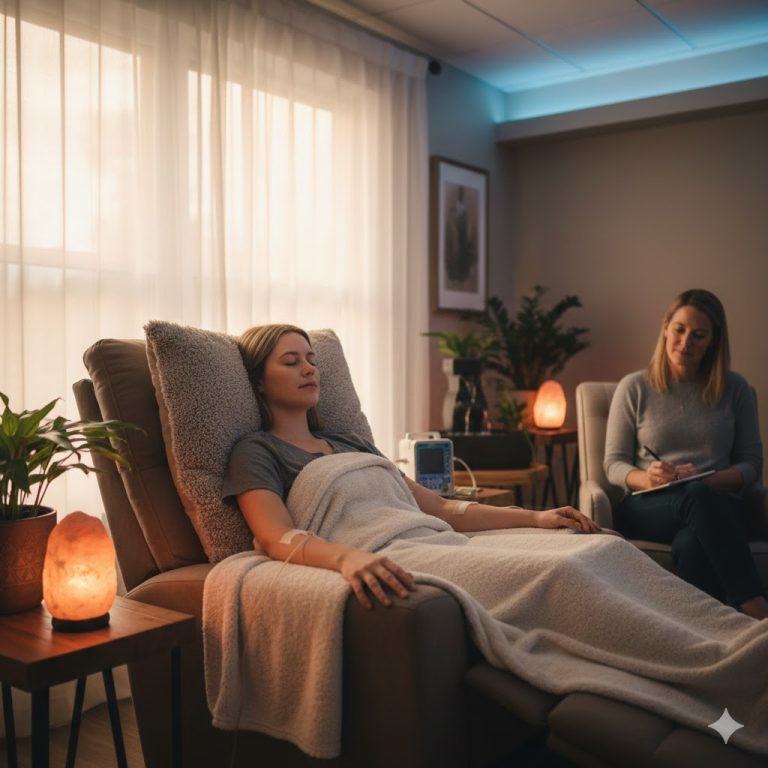
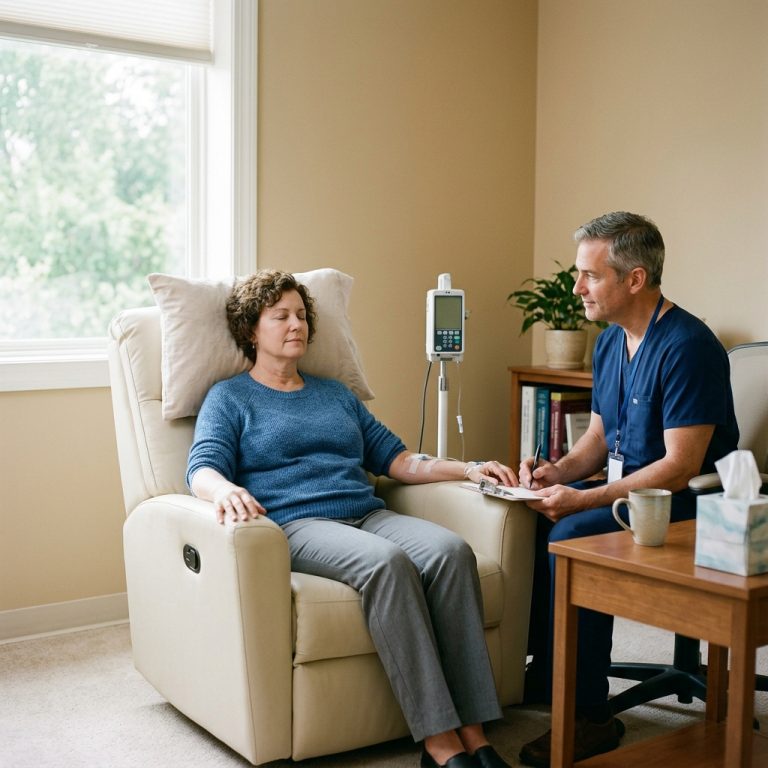
IV Ketamine Infusions in a Monitored Clinical Setting. Treatment is administered intravenously, the delivery method with the most substantial research support for PTSD outcomes, in a clinical environment designed for safety and comfort. Medical supervision is present throughout every session.
Individualized Protocols. No two patients receive identical treatment. Dosing, session structure, and infusion scheduling are determined by each patient’s medical history, current medications, trauma background, and symptom profile. This is not a one-size protocol.
A Series of Infusions. Most patients undergo a planned series of infusions rather than a single treatment. The cumulative neurological effect of multiple sessions is part of what produces durable results. Follow-up and booster scheduling are built into the treatment model.
An Initial Consultation That Starts With Your History. Before any infusion takes place, Fresh Start Ketamine conducts a thorough intake, reviewing medical history, current and past medications, PTSD symptom presentation, and prior treatment experience. The goal is to determine whether ketamine therapy is clinically appropriate for you.
Fresh Start Ketamine operates exclusively as a ketamine therapy clinic. PTSD treatment is a core specialization, delivered in Raleigh, NC, to adults across the full range of trauma backgrounds and PTSD presentations.
The Right Question Isn’t Whether Ketamine Works, It’s Whether It’s Right for You
The evidence for ketamine in PTSD treatment is not the question anymore. The question is whether this treatment is appropriate for your specific history, your symptoms, and your situation, and that is a question a consultation can actually answer.
Not every treatment is right for every person. Ketamine therapy has real candidacy criteria, and the intake process at Fresh Start Ketamine exists precisely to work through them honestly. What it is not is a process designed to talk you into something. If ketamine therapy is not the right fit, that conversation will reflect that.
If you are living with PTSD in the Raleigh area, or supporting someone who is, and what you’ve tried so far hasn’t been enough, the next step isn’t a decision. It’s a conversation.
Schedule a consultation with Fresh Start Ketamine in Raleigh, NC.
FAQ: Ketamine for PTSD
Is ketamine FDA-approved for PTSD?
Ketamine is FDA-approved as an anesthetic and has been used clinically for over 50 years. Its use for PTSD is considered off-label, meaning it is prescribed for a condition outside its original approval, which is standard practice in psychiatry and does not indicate a lack of evidence. The research base supporting ketamine for PTSD is substantial and continues to grow.
How is ketamine different from antidepressants for treating PTSD?
Antidepressants like SSRIs work by targeting serotonin pathways in the brain. Ketamine works through an entirely different system, the glutamate system, by blocking NMDA receptors and promoting the formation of new neural connections. This is why ketamine can be effective for patients whose PTSD has not responded to SSRIs or other conventional treatments.
How long do the effects of ketamine therapy for PTSD last?
Results vary by individual, but many patients report meaningful symptom relief lasting weeks to months following a series of infusions. Ketamine stimulates BDNF production, which supports lasting neuroplasticity rather than temporary symptom suppression. Some patients require periodic booster infusions to maintain results, which is a normal part of an individualized treatment plan.
Is ketamine therapy safe for PTSD treatment?
When administered by trained medical professionals in a monitored clinical setting, IV ketamine infusions have a well-documented safety profile. Dosing is individualized and carefully controlled. The risks associated with recreational ketamine use do not apply to clinical administration, where the setting, dose, and supervision are entirely different.
Does ketamine therapy work for Complex PTSD (C-PTSD)?
Yes. Complex PTSD, which develops from prolonged or repeated trauma rather than a single event, responds to ketamine’s neuroplasticity-promoting mechanism. The treatment is not limited to single-incident trauma. Adults with C-PTSD who have not found adequate relief through conventional therapy or medication are among those who may benefit from IV ketamine infusions.
Do you have to be a veteran to qualify for ketamine therapy for PTSD?
No. While veterans and first responders represent a significant portion of people with PTSD, the condition affects a wide range of adults, survivors of domestic violence, childhood abuse, accidents, medical trauma, and other experiences. Ketamine therapy for PTSD is available to any adult whose trauma background and symptom profile meet clinical candidacy criteria, regardless of whether they have served in the military.
What does a ketamine infusion for PTSD feel like?
During an infusion, patients typically experience a dissociative state, a temporary altered perception of surroundings, time, and self. This is an expected effect of the medication at therapeutic doses and is distinct from the recreational, high-dose experience. Sessions take place in a calm, monitored clinical environment designed to make the experience as comfortable as possible. The dissociative state resolves after the infusion ends.
How many ketamine infusions are needed for PTSD?
Most patients undergo a series of infusions rather than a single session, as the cumulative neurological effect produces more durable results. The exact number is determined for each patient based on their medical history, symptom severity, and treatment response. Fresh Start Ketamine in Raleigh develops individualized treatment plans rather than applying a fixed protocol to every patient.
Is ketamine therapy for PTSD available in Raleigh, NC?
Yes. Fresh Start Ketamine offers IV ketamine infusions for PTSD and Complex PTSD in Raleigh, NC, serving adults throughout the Triangle area. Treatment is administered in a monitored clinical setting with individualized protocols. An initial consultation is required before any infusion to review medical history and determine candidacy.
What happens during the first ketamine consultation for PTSD?
The initial consultation at Fresh Start Ketamine involves a thorough review of your medical history, current and prior medications, PTSD symptom profile, and previous treatment experience. The goal is to determine whether IV ketamine therapy is clinically appropriate for your specific situation. If ketamine is not the right fit, that will be communicated clearly.