
Not All Anxiety Is the Same — Here’s How Ketamine for Anxiety Targets Each Type Differently
Ketamine for anxiety works differently depending on which type of anxiety disorder you have, and that distinction is the reason conventional treatments often fail. Unlike SSRIs or benzodiazepines, which broadly target serotonin or GABA pathways, ketamine modulates glutamate, the brain’s primary excitatory neurotransmitter, and promotes neuroplasticity at the circuit level.
This means it can address the specific neurological dysfunction driving generalized anxiety disorder, social anxiety disorder, and treatment-resistant anxiety. If you’re in the Raleigh, NC area and have cycled through medications or therapy without lasting relief, the problem may not be your persistence. It may be the mechanism.
Why Anxiety Type Matters More Than Most Treatments Acknowledge
Most people with anxiety have heard some version of the same clinical story: try this SSRI, give it six to eight weeks, adjust the dose, add therapy, repeat. What that story rarely includes is a neurological explanation for why that approach works for some people and not others.
The short answer is that anxiety disorders are not a single condition. They share a surface layer, worry, avoidance, physiological arousal, and difficulty sleeping, but underneath, they differ significantly in which brain systems are dysregulated and how.
Generalized anxiety disorder involves a chronically overactive threat-prediction loop between the prefrontal cortex and the amygdala. Social anxiety disorder is driven by amygdala hyperreactivity, specifically triggered by interpersonal evaluation. Treatment-resistant anxiety frequently involves dysfunction in the glutamate system that serotonin-targeting drugs cannot reach.
Conventional first-line treatments were not designed with these distinctions in mind. SSRIs modulate serotonin reuptake across the board. Benzodiazepines enhance GABA activity to produce broad sedation.
Neither approach targets the circuit-level dysfunction that defines each anxiety subtype, which is why partial relief is so common, and why the same medication can work well for one person and do almost nothing for another with the same diagnosis.
Ketamine operates differently. Its primary mechanism, glutamate modulation combined with rapid promotion of synaptic neuroplasticity, acts on the brain’s adaptability itself rather than a single neurotransmitter pathway.
This gives it a meaningful advantage in addressing anxiety presentations that have not responded to conventional treatment, because it is not competing on the same neurochemical terrain.
Generalized Anxiety Disorder: When the Brain Can’t Stop Predicting Threat
Generalized anxiety disorder is not simply “worrying too much.” At the neurological level, GAD is characterized by a prefrontal cortex–amygdala circuit that has become stuck in a persistent, low-grade state of alert.
The brain is continuously generating threat predictions, even in the absence of identifiable triggers. The result is the kind of chronic, unfocused anxiety that follows a person from morning to night, exhausting to manage precisely because there is nothing specific to resolve.
SSRIs can reduce the emotional intensity of this cycle. Still, they do not address the underlying hyperactivity of the prefrontal cortex–amygdala circuit that drives persistent rumination for many GAD patients, which translates to years of treatment that takes the edge off without actually quieting the loop.
Ketamine’s mechanism is more directly relevant here. By promoting neuroplasticity in the prefrontal cortex, ketamine helps rebuild the brain’s capacity to regulate its own threat-detection activity, essentially helping the brain re-learn how to de-escalate. This is not symptom management at the surface level; it is intervention at the level of the circuit that produces the symptoms.
For people who have been managing GAD for years or decades, the rapid relief timeline that ketamine can offer is particularly meaningful. Relief measured in days rather than weeks or months can interrupt a pattern of chronic anxiety that has become deeply entrenched.
Social Anxiety Disorder: When the Fear Lives in Connection
Social anxiety disorder is sometimes dismissed as shyness or introversion. Neurologically, it is neither. Social anxiety involves hyperactivation of the amygdala in response to social evaluation. The brain processes interpersonal exposure the same way it processes physical danger, triggering a full fear response in situations that carry no objective threat. A meeting, a conversation, walking into a room, any context where judgment might occur, can activate the same physiological cascade as encountering something genuinely dangerous.
This amygdala hyperreactivity is not primarily driven by serotonin dysregulation, which explains why SSRIs provide only partial relief for social anxiety specifically. They can reduce generalized distress, but they do not target the evaluation-triggered amygdala overactivation that defines the disorder. Many social anxiety patients find themselves less miserable on SSRIs but still unable to engage socially without significant anticipatory dread.
Ketamine addresses this through a different pathway. By modulating glutamate activity and reducing neuroinflammation, ketamine can dampen amygdala overactivation, allowing the brain to process social situations without triggering a disproportionate fear response.
Many patients report increased capacity for social engagement and a notable reduction in anticipatory anxiety following a series of infusions. That shift, from dreading interactions to being able to approach them, represents a meaningful change in daily functioning, not just a reduction in symptom scores.
Social anxiety is also among the most isolating of the anxiety disorders. The disorder’s primary domain is connection, which means its highest costs are measured in relationships not pursued, opportunities not taken, and a consistent withdrawal from the parts of life that make it meaningful. A treatment that addresses the neurological driver of that withdrawal, rather than just making it slightly more tolerable, is a qualitatively different proposition.
Treatment-Resistant Anxiety: When the Standard Playbook Has Been Exhausted
Treatment-resistant anxiety is defined clinically as an inadequate response to two or more first-line treatments. It is more common than most patients realize, and it is not a reflection of a person’s condition or the degree of effort they have put into their own care. In most cases, it is a mechanism mismatch.
This matters: if a significant driver of your anxiety disorder involves glutamate-system dysfunction, then serotonin-targeted medications cannot correct it. It is not that the medication failed; it is that the medication was targeting a different system than the one that needed intervention. That distinction is not semantic. It changes what the right next step looks like.
Ketamine’s modulation of glutamate offers a fundamentally different intervention pathway. It bypasses the serotonin system entirely and works directly on neural adaptability, the brain’s capacity to form new connections and break out of entrenched dysfunction. For people whose anxiety has not responded to SSRIs, SNRIs, benzodiazepines, or extended courses of therapy, this represents a mechanism-level alternative rather than another iteration of the same approach.
Treatment-resistant anxiety is central to the patient population at Fresh Start Ketamine in Raleigh, NC. The clinic works primarily with adults who have tried multiple approaches and have not found adequate relief, not as a last resort in a dismissive sense, but as a first step toward a treatment designed for what their brain is doing.
How Fresh Start Ketamine Personalizes Treatment for Different Anxiety Presentations
The neurological differences between anxiety subtypes are not incidental to how Fresh Start Ketamine approaches treatment; they are the basis for it. No two treatment plans at the clinic are identical. Dosing strategy, session frequency, and overall treatment structure are customized based on the patient’s specific anxiety profile, medical history, and prior treatment history.
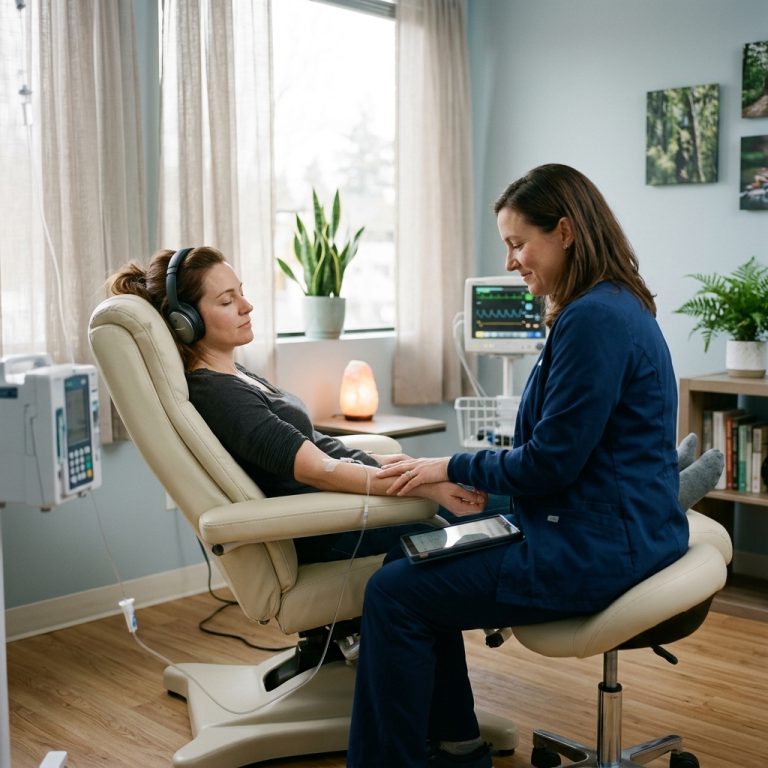
IV ketamine infusions are administered in a calm, monitored clinical environment in Raleigh, NC. Sessions typically last 45 minutes to one hour. The initial series consists of infusions delivered over a defined course, followed by maintenance infusions as clinically indicated. The schedule is built around the individual, not a standardized protocol applied uniformly regardless of presentation.
The process begins with a comprehensive intake evaluation. This is not a formality. It is where the treatment approach takes shape, where the patient’s specific neurological and symptomatic presentation is mapped to a treatment structure designed to address it. For patients who have spent years on treatments that were not designed for their anxiety type, that evaluation is often the first time the mechanism-level picture becomes clear.
Anxiety Is Complex — Your Treatment Should Be Too
Anxiety disorders share a name and some surface symptoms. They do not share a neurology, and they should not share a treatment protocol. The reason so many people cycle through medications and therapy without lasting relief is not that relief is unavailable; it is that the treatment they received was designed for a different presentation than the one they have.
Ketamine for anxiety works because it operates at a level that conventional treatments do not reach: the brain’s capacity for change itself. For generalized anxiety disorder, social anxiety disorder, and treatment-resistant anxiety alike, that mechanism-level difference is what makes ketamine a meaningful clinical option rather than simply another line on the trial-and-error list.
If you’re in the Raleigh area and have not found lasting relief through conventional treatment, a consultation at Fresh Start Ketamine is not a commitment to a particular path. It is the first step in understanding which anxiety profile applies to your experience, and what that means for your options. That clarity is worth having regardless of what you decide next.
Schedule a consultation with Fresh Start Ketamine in Raleigh, NC.
FAQ
What is ketamine for anxiety, and how does it work?
Ketamine for anxiety is an IV infusion therapy that works by modulating glutamate, the brain’s primary excitatory neurotransmitter, rather than targeting serotonin like most conventional anxiety medications.
This glutamate modulation promotes rapid neuroplasticity, helping the brain rebuild regulatory circuits that anxiety disorders erode over time. It is particularly relevant for anxiety presentations that have not responded to SSRIs or benzodiazepines.
Does ketamine help with generalized anxiety disorder (GAD)?
Yes. Ketamine has shown clinical relevance for generalized anxiety disorder by targeting the prefrontal cortex–amygdala circuit that drives chronic, diffuse worry. Unlike SSRIs, which reduce emotional intensity at the surface, ketamine promotes neuroplasticity in the prefrontal cortex, helping the brain rebuild its capacity to de-escalate threat prediction. Many GAD patients report meaningful relief within days of their first infusion series.
Can ketamine treat social anxiety disorder?
Ketamine may be effective for social anxiety disorder because it addresses amygdala hyperactivation, the neurological driver of fear responses to social evaluation, through glutamate modulation and reduction of neuroinflammation.
SSRIs, by contrast, target serotonin pathways and often provide only partial relief for social anxiety specifically. Patients frequently report reduced anticipatory anxiety and greater capacity for social engagement after a series of ketamine infusions.
What is treatment-resistant anxiety, and is ketamine an option?
Treatment-resistant anxiety is defined as inadequate relief after two or more first-line treatments, including SSRIs, benzodiazepines, or therapy. It is often caused by a mechanism mismatch, specifically, glutamate-system dysfunction that serotonin-targeting medications cannot correct. Ketamine directly modulates the glutamate system, making it a mechanistically distinct alternative for patients whose anxiety has not responded to conventional treatment.
Why don’t SSRIs work for some types of anxiety?
SSRIs are designed to increase serotonin availability in the brain, which addresses anxiety presentations that are primarily serotonergic in nature. However, many anxiety disorders, particularly treatment-resistant cases and certain presentations of social anxiety, involve dysfunction in the glutamate system or specific circuit-level dysregulation that serotonin modulation cannot reach. For these patients, the medication is not failing because of something they are doing; it is failing because it is targeting the wrong system.
How long does ketamine take to work for anxiety?
One of ketamine’s distinguishing clinical features is its rapid onset compared to conventional anxiety treatments. While SSRIs typically require four to eight weeks to produce therapeutic effects, many patients begin experiencing relief within hours to days following their first ketamine infusion or initial infusion series. The timeline varies based on the individual’s anxiety profile and treatment history, which is why a personalized evaluation matters.
What types of anxiety does Fresh Start Ketamine treat in Raleigh, NC?
Fresh Start Ketamine in Raleigh, NC, works with adults experiencing generalized anxiety disorder, social anxiety disorder, and treatment-resistant anxiety, particularly those who have tried multiple conventional treatments without achieving lasting relief. Treatment plans are individualized based on each patient’s specific anxiety profile, medical history, and prior treatment history. An intake evaluation precedes all infusion protocols.
Is ketamine infusion therapy safe for anxiety?
Ketamine infusion therapy for anxiety is administered in a monitored clinical setting, typically in sessions lasting 45 minutes to one hour. It has a well-established safety profile in medical contexts and has been used clinically for decades. At Fresh Start Ketamine, infusions are conducted under close clinical supervision with protocols tailored to each patient’s medical and psychiatric history.
How many ketamine infusions are needed for anxiety?
The standard approach begins with an initial series of infusions delivered over a defined course, followed by maintenance infusions as clinically indicated. However, the exact number and frequency vary from individual to individual.
There is no one-size-fits-all protocol; session frequency and total infusion count are determined by the patient’s anxiety presentation, treatment response, and overall clinical picture. This is established during the intake evaluation before treatment begins.
What is the difference between ketamine and benzodiazepines for anxiety?
Benzodiazepines reduce anxiety by enhancing GABA activity, producing broad sedation. They work quickly but carry risks of dependence and tolerance, and they do not produce lasting neurological changes. Ketamine modulates glutamate and promotes neuroplasticity, meaning it acts on the brain’s structural adaptability rather than merely temporarily suppressing chemical activity. Ketamine is not a daily maintenance medication; it is administered in a defined infusion series, with effects that can persist well beyond the infusion period.