
Ketamine for PTSD and the Hyperactive Threat-Detection System: Recalibrating the Brain’s Alarm Response After Trauma
Ketamine for PTSD works by targeting a specific, measurable circuit dysfunction. If you live with PTSD, you already know what this feels like: scanning a room for exits without deciding to, flinching at a sound that startled no one else, feeling a flicker of danger in a moment that is, by every objective measure, calm.
It is the output of a threat-detection system that trauma has recalibrated toward constant alarm. For people in the Raleigh, NC area exploring treatment options, understanding why this happens and how ketamine may help reverse it starts with three brain structures: the amygdala, the insula, and the prefrontal cortex.
This article walks through that circuit, what goes wrong in PTSD-related hypervigilance, and how ketamine’s mechanism of action is different from medications that simply quiet symptoms in the moment.
Why Your Brain Treats Safe Situations as Dangerous: The Amygdala’s Role in PTSD
You know this feeling: a racing heart in a quiet room, the inability to fully relax even surrounded by people you trust, a sense that something is about to go wrong with no evidence that it will.
The amygdala is the brain’s primary threat-detection structure. It evaluates incoming sensory information for danger signals before conscious awareness has fully processed the situation. In PTSD, the amygdala becomes hyperreactive generating fear responses to ambiguous or neutral stimuli that resemble, even faintly, elements of the original traumatic experience.
This isn’t a memory being consciously recalled. It’s the amygdala pattern-matching at a speed and sensitivity that bypasses rational evaluation entirely. The amygdala’s threat assessment happens before the prefrontal cortex the brain’s rational evaluation center ever has a chance to weigh in. That’s why the fear arrives before the thought “but I’m safe” does.
Why PTSD Lives in the Body: The Insula and Interoceptive Threat Signals
The insula processes interoceptive signals the brain’s awareness of the body’s internal state. In PTSD, the insula becomes hypersensitized to bodily sensations associated with the trauma response, such as an elevated heart rate or muscle tension. This creates a feedback loop: physical arousal is interpreted by the hyperreactive insula as confirmation of danger, which further amplifies the physical arousal.
This is why PTSD hypervigilance is experienced as profoundly physical. The body’s own signals become evidence the threat-detection system uses against the person experiencing them.
Why Rational Reassurance Fails: The Prefrontal Cortex’s Lost Regulatory Control
You know, intellectually, that you’re safe. You still can’t feel it. That gap between what you understand and what you feel is one of the most frustrating parts of PTSD, both for the person living with it and for the people around them.
The prefrontal cortex, particularly the ventromedial region, is normally responsible for evaluating amygdala threat signals and down-regulating them when no genuine danger is present a top-down control system. In PTSD, this regulatory connection is functionally impaired. The prefrontal cortex’s ability to override and calm amygdala activity is significantly weakened.
This is the precise neurological reason why willpower, logic, or reassurance from others cannot resolve PTSD hypervigilance. The brain’s rational center is structurally disconnected from its alarm center in a way that conscious effort alone cannot repair. If you’ve been told to “just relax” or “just calm down,” this is why that was never going to work because the circuit responsible for calming down is the one that’s impaired.
How Ketamine Restores the Brain’s Capacity to Recognize Safety
This three-part circuit: the amygdala, insula, and prefrontal cortex is where ketamine’s mechanism becomes especially relevant in PTSD and Complex PTSD. Ketamine’s NMDA receptor antagonism promotes neuroplasticity within the prefrontal cortex, supporting stronger regulatory connections throughout the affected circuit. This process helps enhance top-down regulation of amygdala activity and supports improved emotional processing.
Ketamine also helps regulate glutamatergic activity across the limbic system, supporting balanced amygdala responses and improved insula regulation of interoceptive threat signals. These effects address the somatic dimension of circuit dysfunction by promoting healthier communication between key brain regions. Unlike medications that primarily provide short-term anxiety symptom relief, ketamine’s neuroplastic effects focus on supporting the structural connectivity and recalibration of the threat-detection system.
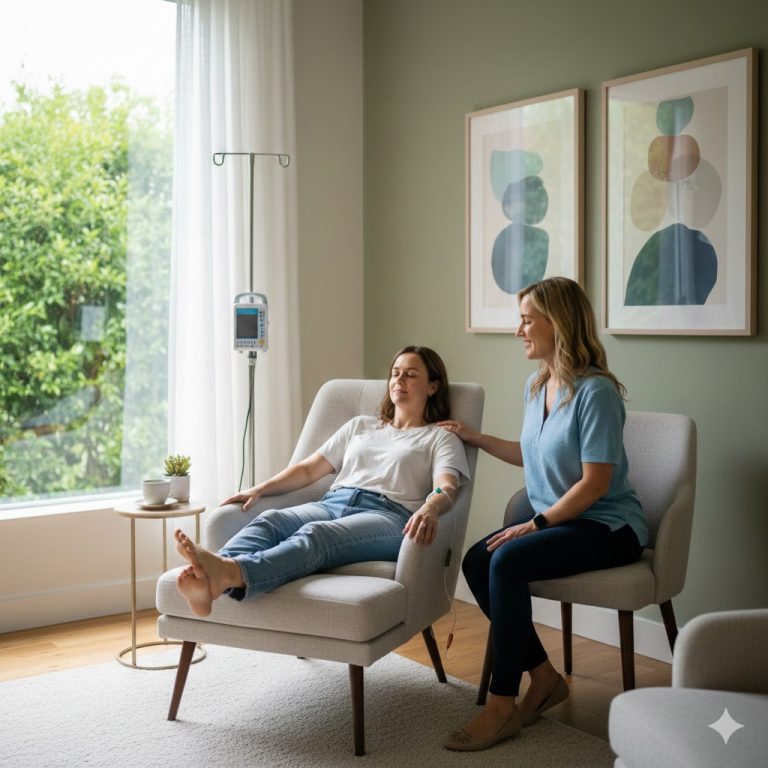
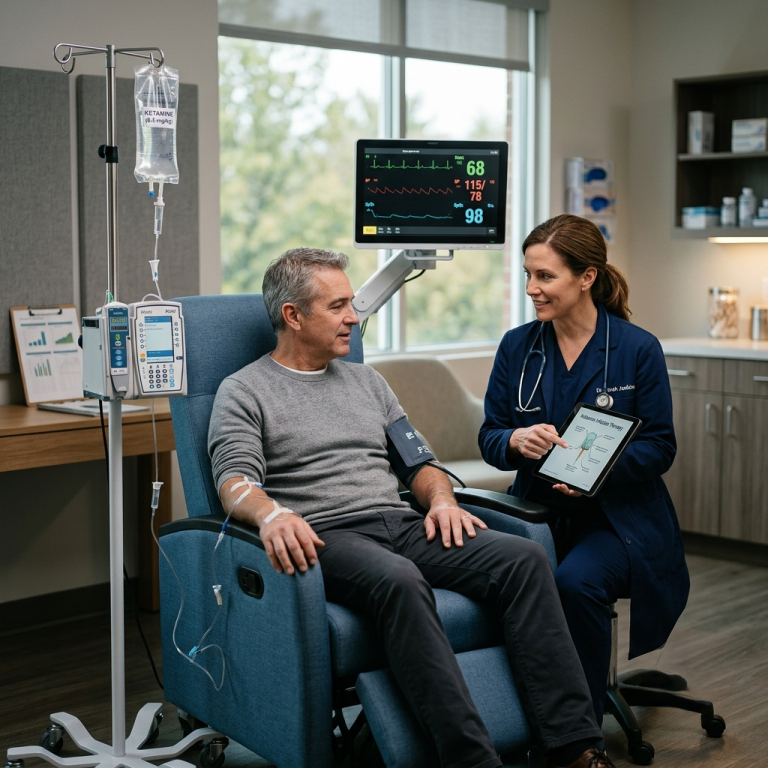
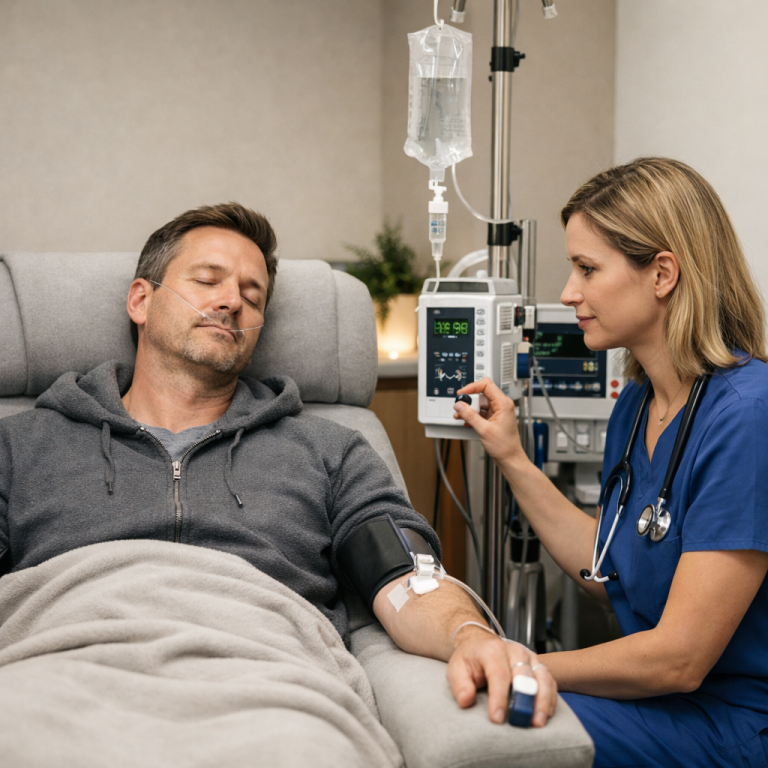
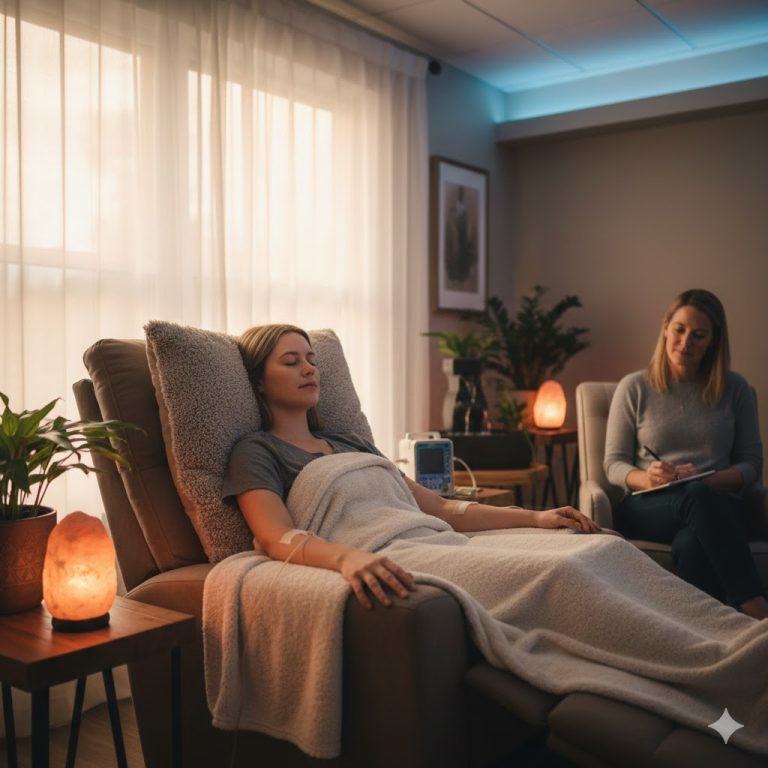
At Fresh Start Ketamine, IV ketamine infusions for PTSD and Complex PTSD are administered in a calm, monitored clinical setting in Raleigh, NC, designed to support this neuroplastic process. The treatment environment provides structured clinical oversight while patients engage with a therapy approach centered on nervous system regulation. This comprehensive approach supports the brain’s ability to adapt, reorganize, and develop healthier responses to safety signals.
The Alarm Doesn’t Have to Stay On
Living with a threat-detection system stuck in alarm mode is exhausting in ways that are difficult to convey to people who haven’t experienced it. But this isn’t a mysterious or unexplainable burden it’s a known, named, circuit-level phenomenon, and it’s one that current neuroscience suggests can be addressed at the structural level.
If you’re in the Raleigh, NC area and recognize this experience in yourself, Fresh Start Ketamine offers consultations to discuss whether ketamine therapy may be a fit for your PTSD or Complex PTSD. Schedule a consultation to start a clinical conversation grounded in what you now understand about your own brain.
Frequently Asked Questions
Does ketamine help with PTSD hypervigilance specifically?
Ketamine’s mechanism targets the neural circuit involved in hypervigilance primarily by supporting prefrontal cortex neuroplasticity, which governs top-down regulation of amygdala threat responses. By supporting the rebuilding of this regulatory connection, ketamine may help reduce the frequency and intensity of hypervigilant states over time.
Why does my brain feel stuck in fight-or-flight even when I’m safe?
This happens because the amygdala, the brain’s threat-detection structure, has become hyperreactive after trauma and generates fear responses to neutral or ambiguous stimuli. At the same time, the prefrontal cortex’s ability to down-regulate that response is impaired, so the alarm signal doesn’t get switched off the way it normally would.
What is the connection between the amygdala and PTSD treatment?
The amygdala evaluates sensory information for danger before conscious awareness processes it, and in PTSD it becomes hypersensitive to trauma-resembling cues. Many PTSD treatments, including ketamine, work in part by supporting better regulation of this amygdala activity through the prefrontal cortex.
Is ketamine the same as a sedative or anti-anxiety medication?
No. Medications like benzodiazepines primarily suppress anxiety symptoms acutely without changing the underlying circuit. Ketamine works through NMDA receptor antagonism to promote neuroplasticity, aiming at structural recalibration of the threat-detection circuit.
Why can’t I just talk myself out of feeling unsafe?
Because the amygdala’s threat assessment occurs before the prefrontal cortex the brain’s rational evaluation center has a chance to weigh in, and in PTSD, the prefrontal cortex’s regulatory connection to the amygdala is also weakened. This means the felt sense of danger isn’t a logic problem; it’s a circuit-level disconnection that conscious reasoning alone cannot override.
Why does PTSD feel physical?
The insula processes the body’s internal sensations and becomes hypersensitized in PTSD, interpreting normal physical arousal like a faster heartbeat as confirmation of danger. This creates a feedback loop between body and brain, which is why PTSD hypervigilance is often felt as strongly in the body as in the mind.
Where can I get ketamine treatment for PTSD in Raleigh, NC?
Fresh Start Ketamine offers IV ketamine infusions for PTSD and Complex PTSD in a monitored clinical setting in Raleigh, NC. A consultation is the first step to determine whether this treatment approach may be appropriate for your situation.
How long does it take to see results from ketamine therapy for PTSD?
Individual timelines vary based on the person and their treatment plan, and this is best discussed directly with a clinician during a consultation. Because ketamine’s mechanism involves neuroplastic changes, response patterns differ from person to person.