What Happens During a Ketamine Infusion: A Step-by-Step Walkthrough of the Clinical Procedure
If you have been searching for a ketamine infusion near me, the answer to what actually happens is straightforward. At Fresh Start Ketamine in Raleigh, NC, a standard session runs 45 to 60 minutes, patients remain fully conscious throughout, a driver is required for the ride home, and the experience is far calmer. The following is a complete walkthrough of every stage, from the first consultation to the end of recovery.
Before Your Infusion: What to Do and What to Expect
Step 1: Your Treatment Plan Is Built Before Your First Infusion
Every patient begins with a thorough intake consultation before any session is scheduled. Medical history, current medications, psychiatric history, and the condition being treated are carefully reviewed. Dosing is individualized based on this assessment. No single dose is applied to every patient.
The consultation is also the clinical safety screening step. Ketamine is considered unsuitable for patients with active psychosis. Patients with uncontrolled hypertension or certain cardiovascular or pulmonary conditions may need clearance from a primary care physician before undergoing treatment. This is also where scheduling happens, remaining questions are addressed, and a patient confirms eligibility for treatment.
Step 2: What to Do on the Day of Your Infusion
Arriving on a four-hour fast is required. Food in the stomach raises the risk during the session. Water is fine. Stimulants should be avoided on the day of treatment.
The most important logistical step is arranging a driver well in advance of the appointment. Patients sign a waiver confirming they will avoid driving or operating a vehicle for at least 12 hours after the infusion. Rest is recommended for the remainder of that day. These are clinical requirements for safe treatment.
During Your Infusion: A Step-by-Step Account
This section is the one most patients want before their first session of ketamine infusion near me in Raleigh, NC. The following covers what is set up, what the patient experiences, and what the dissociative effects actually feel like.
Step 3: Arriving at the Clinic and Getting Settled
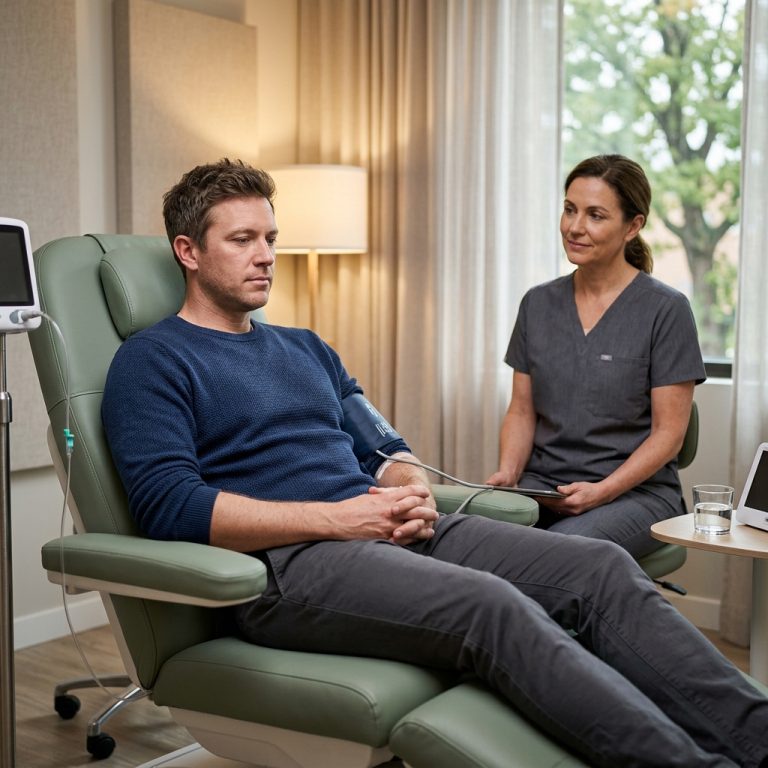
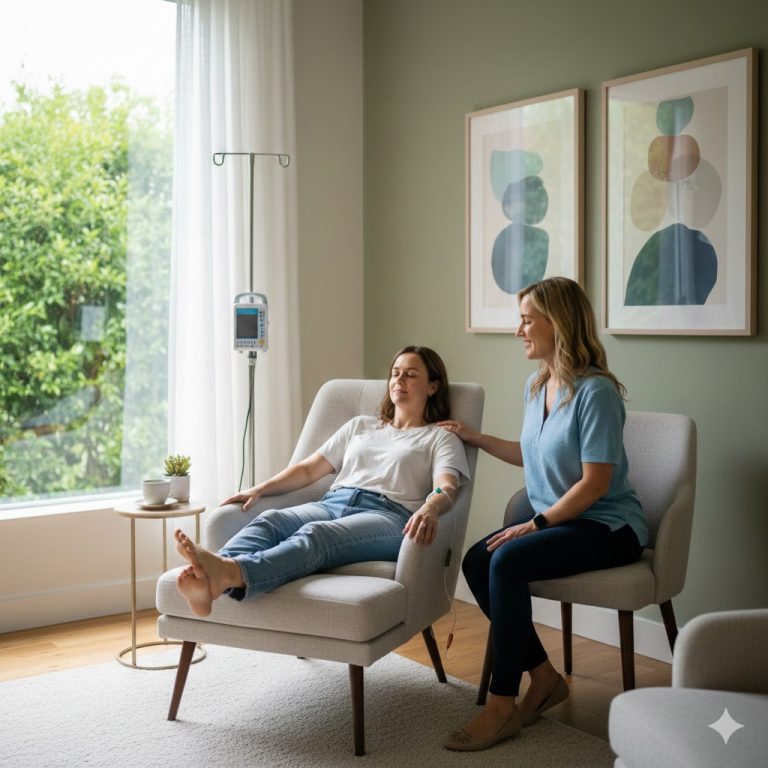
Patients are brought to a private treatment room designed for comfort. Soft lighting, calming music options, and a restful environment are standard features. Staff review the patient’s current status and confirm pre-infusion instructions were followed. Pre-infusion nerves are completely normal. The environment and clinical team are there to help patients settle in.
Step 4: The IV Is Placed Quickly and with Minimal Discomfort
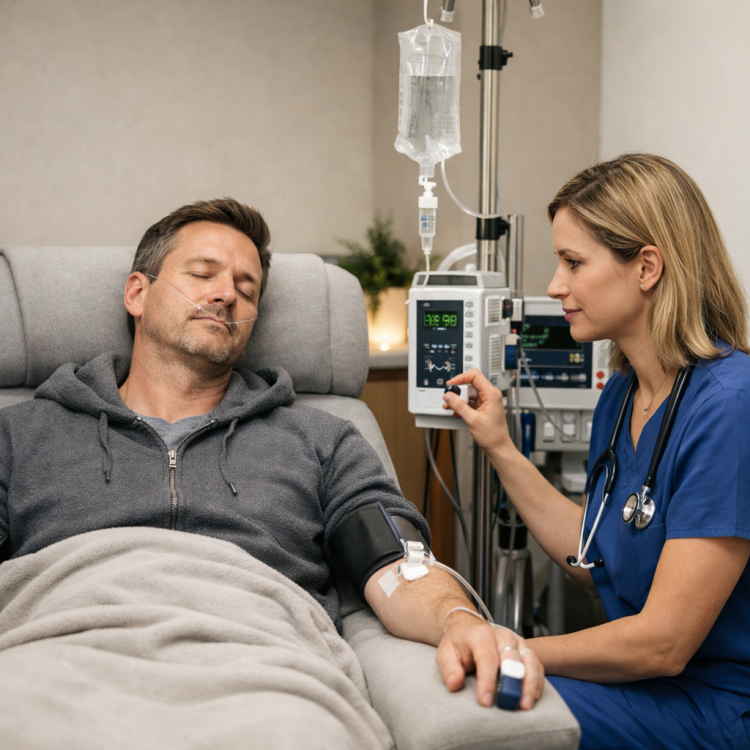
A small IV line is placed in a vein in the arm. The process takes only a moment and is minimally uncomfortable for most patients. Intravenous administration is the preferred delivery method for ketamine therapy because it allows precise, real-time control over dose and infusion rate. This level of accuracy is difficult to achieve through oral, intramuscular, or intranasal routes.
Step 5: The Infusion Runs for 45 to 60 Minutes Under Continuous Monitoring
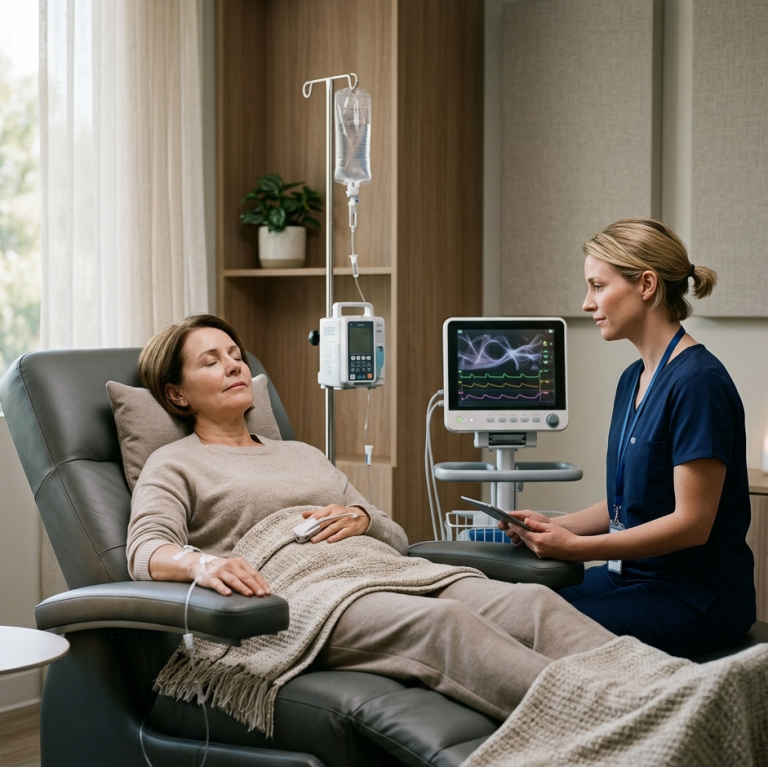
Ketamine is administered at a slow, controlled rate once the IV is in place. Sessions run approximately 45 to 60 minutes. Staff remain present throughout the infusion, checking vitals and clinical responses at regular intervals. Patients remain fully conscious throughout. At therapeutic doses, ketamine does not produce sleep or unconsciousness. Some patients keep their eyes closed. Others keep them open. Both are equally fine.
Step 6: What You Will Actually Feel During the Infusion
In the first few minutes, effects may be minimal. As the infusion progresses, most patients report a feeling of lightness, often likened to a weight being lifted. Some patients notice mild perceptual shifts, such as an altered sense of time, subtle changes to visual or auditory perception, or a gentle sense of detachment from ordinary thought patterns. This is the dissociative effect of ketamine at therapeutic doses.
These effects are temporary and are generally well tolerated. They differ significantly from descriptions of recreational use. The dose and the clinical setting are in an entirely different category. Most patients find the experience unusual, calm, and manageable.
Common side effects, such as mild nausea, light-headedness, temporary disorientation, or headache, may occur and tend to resolve quickly. The clinical team is present and ready to respond if anything feels uncomfortable during the session.
After Your Infusion: Recovery, Discharge, and What Comes Next
Step 7: The Dissociative Effects Clear Within 15 Minutes of the Infusion Ending
When the infusion ends, the effects begin clearing. Most patients feel grounded and clearheaded within 15 minutes. Fatigue is common after a medically supervised procedure, and rest is appropriate. A pre-arranged driver takes the patient home. A quiet evening is recommended.
Significant decisions, document signing, and returning to work should all be avoided on the day of the infusion. The 12-hour no-driving window reflects how the medication metabolizes and how judgment can remain subtly affected even after a patient feels normal.
Step 8: A Single Infusion Is the Start of a Structured Treatment Course
One infusion is the beginning of a treatment plan, not a complete one. A standard course consists of six infusions administered over a defined period. Some patients notice mood shifts or relief after the first session. This early response is meaningful, and the neuroplastic benefits, including new synaptic connections and glutamate system recalibration, consolidate over the full series of infusions.
Maintenance infusions may be scheduled after the initial course based on individual clinical response. This is determined through follow-up and is discussed with each patient individually.
You Now Know What to Expect
Most patients at Fresh Start Ketamine in Raleigh, NC, report that the actual ketamine infusion experience was far calmer. The procedure is quiet, monitored, and medically precise. The dissociative effects are real, manageable, and temporary. The recovery window is short.
Procedural uncertainty is one of the most common reasons patients delay booking. That uncertainty has now been addressed. The next step is a consultation at Fresh Start Ketamine, where the dosing protocol is built, remaining questions are answered, and treatment is scheduled.
Fresh Start Ketamine serves patients throughout Raleigh and the Triangle area. Schedule your consultation today.
Frequently Asked Questions
Is a ketamine infusion painful?
The infusion itself is painless. A small IV line is placed in the arm, which takes a moment and is minimally uncomfortable for most patients. The ketamine is then delivered through the IV at a controlled rate throughout the session.
How long does a ketamine infusion take?
A standard session at Fresh Start Ketamine runs approximately 45 to 60 minutes. When arrival, IV placement, and the post-infusion recovery window are factored in, patients should plan for a total clinic visit of around 90 minutes to two hours.
Will I be conscious during the infusion?
Yes. Ketamine at therapeutic doses does not cause unconsciousness or sleep. Patients remain aware of their surroundings throughout the session, though mild perceptual shifts and a sense of lightness are common as the infusion progresses.
Can I drive home after a ketamine infusion?
A pre-arranged driver is required before the appointment. Patients sign a waiver confirming they will avoid driving or operating a vehicle for at least 12 hours after the infusion. This is a clinical requirement, not a general suggestion.
What does the dissociative experience feel like?
Most patients describe mild perceptual shifts, a sense of floating, altered time perception, or gentle detachment from ordinary thought. The dose is carefully controlled, and the setting is clinical. The experience is generally well tolerated, and the clinical team is present to respond if anything feels uncomfortable.
What are the side effects of a ketamine infusion?
The most common side effects are mild nausea, light-headedness, temporary disorientation, and headache. These typically resolve quickly after the infusion ends. Staff monitors patients throughout the session and during the recovery window before discharge.
How many ketamine infusions are needed?
A standard treatment course consists of six infusions administered over a defined period. Lasting neuroplastic benefits consolidate over the full series. Maintenance infusions may be administered depending on the individual’s clinical response.
What should I eat before a ketamine infusion?
Patients should arrive after fasting for at least 4 hours. Food raises the risk of nausea during the session. Staying hydrated with water is encouraged. Solid food and stimulants should be avoided on the day of treatment.
Is ketamine infusion therapy right for me?
Eligibility is evaluated individually during an intake consultation at Fresh Start Ketamine. Ketamine is considered unsuitable for patients with active psychosis, and those with certain cardiovascular or pulmonary conditions may require medical clearance first. The consultation is where suitability, dosing, and the treatment plan are determined.
What happens after the initial infusion series is complete?
After completing the six-infusion course, clinical response is evaluated. Some patients transition to periodic maintenance infusions to sustain results. This is determined through follow-up and is discussed individually with each patient based on their response to the treatment series.