
Ketamine for Chronic Pain Infusion Protocols Explained: How Dosing, Duration, and Frequency Differ From Mental Health Treatment
Ketamine for chronic pain follows a different protocol logic. The molecule is the same, yet the dosing strategy, session structure, and scheduling cadence are applied differently. This article breaks down where and why protocols diverge by indication and how Fresh Start Ketamine in Raleigh, NC approaches dosing within that landscape.
A common assumption among patients who have encountered ketamine in a mental health context is that the infusion protocol is the same regardless of what it is treating. Clinically, that assumption needs a closer look, and the published guidance from leading medical organizations tells a more detailed story. Published guidance from the American Society of Regional Anesthesia and Pain Medicine (ASRA), the American Academy of Pain Medicine (AAPM), and the American Society of Anesthesiologists (ASA) describes pain-specific ketamine protocols that differ in dosing measurement, infusion duration, and scheduling approach from the more standardized protocols used for mood disorders.
These differences reflect distinct underlying mechanisms, distinct clinical populations, and an ongoing body of research. For a patient evaluating ketamine providers for a condition like CRPS, fibromyalgia, or neuropathic pain, this shapes which questions to ask and how to interpret a clinic’s protocol description. Knowing this helps in identifying whether a given approach reflects current clinical thinking.
How Ketamine Dosing Strategy Differs Between Chronic Pain and Mental Health Treatment
The Pain-Focused Dosing Model
Published chronic pain protocols drawn from ASRA, AAPM, and ASA guideline summaries describe ketamine for chronic pain infusion using continuous infusion dosing measured in mg/kg/hr. Reported ranges vary substantially across studies, reflecting that the field has produced a wide spectrum of pain dosing standards. That variability is itself clinically meaningful, as chronic pain conditions involve a wide range of severity and central sensitization profiles.
A patient with CRPS-II who has experienced years of sympathetically maintained pain presents a different physiological picture. The mg/kg/hr model, adjusted to individual weight and clinical presentation, allows dosing to be calibrated in more precise ways. This makes individualized assessment a central part of responsible pain-focused ketamine care.
The Mental Health Dosing Model
Published protocols for depression, anxiety, and PTSD more consistently use a fixed subanesthetic dose delivered over a defined, shorter infusion window. The six-infusion series structure that characterizes most published mental health protocols emerged from research showing that neuroplasticity-related response accumulates predictably across a consistent dosing series. Because the mechanism and patient population are more uniform relative to the chronic pain landscape, the literature has been able to converge around a more consistent approach.
Fresh Start Ketamine’s Approach
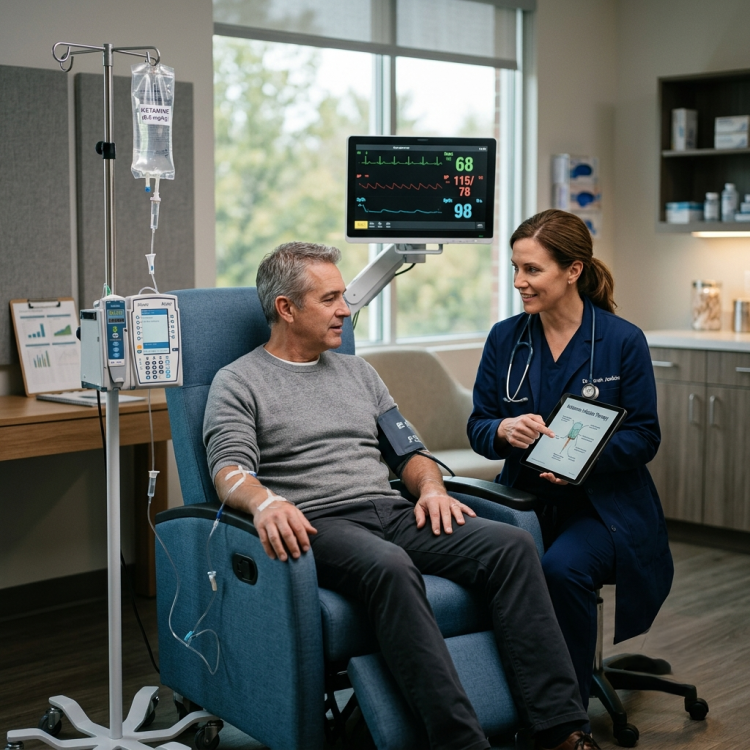
At Fresh Start Ketamine in Raleigh, NC, dosing is individualized for every patient based on a comprehensive intake assessment of condition, medical history, and prior treatment response. All infusions are delivered within a monitored 40 to 60 minute session. Specific dosing parameters are determined at the clinical level following that assessment and are applied with each patient’s individual presentation in mind.
Infusion Session Duration: Field Variability and Clinical Monitoring
What the Broader Literature Describes for Pain
Session duration is one of the areas of greatest variability in chronic pain ketamine research. Published studies describe protocols ranging from continuous infusions lasting several hours to, in some inpatient research settings, multi-day continuous administration for severe CRPS cases. This variability reflects ongoing research and a wide range of studied protocols across different institutions and patient populations.
A patient researching how long a ketamine infusion takes for pain will encounter a genuinely wide range of answers in the literature, and these answers describe different clinical contexts. Extended-duration protocols are largely associated with inpatient or hospital-based settings. That distinction matters for patients evaluating outpatient clinic options.
Fresh Start Ketamine’s Confirmed Protocol
At Fresh Start Ketamine, infusion sessions for all conditions including ketamine for chronic pain are administered over approximately 40 to 60 minutes in a monitored clinical setting. The session duration is calibrated to the individualized dose established during the patient’s intake assessment. Fresh Start operates within an outpatient model with sessions structured to the patient’s clinical profile.
How Often Infusions Are Scheduled: Pain vs. Mood Disorder Treatment Courses
Scheduling Variability in the Pain Literature
Treatment frequency for ketamine-based chronic pain management shows wide variation in published research. Some protocols use consecutive daily infusions over a compressed period, such as five consecutive days, while others use spaced infusions over weeks or months guided by individual symptom response. The scheduling variability in pain literature reflects a genuinely heterogeneous patient population with differing flare patterns, physical triggers, and disease progression.
The Mental Health Course Structure
Mental health protocols, particularly for depression, have converged around an initial series of six infusions delivered over a defined multi-week period. Maintenance infusions are then scheduled at intervals of several weeks to months based on symptom recurrence. The six-infusion model reflects consistent findings in the neuroplasticity literature, showing that cumulative dosing over the series produces more durable antidepressant effects.
Fresh Start Ketamine’s Approach
Fresh Start Ketamine structures an initial infusion series for ketamine for chronic pain patients, with maintenance infusion frequency determined individually based on each patient’s clinical response. Scheduling follows the same individualized, intake-driven model applied across all conditions treated at the clinic. Maintenance scheduling is calibrated to how the individual responds over the course of treatment, with the clinical team guiding each step.
Why Understanding Protocol Differences Helps You Evaluate Ketamine Treatment
Because chronic pain ketamine protocols are less standardized across the field, patient-specific clinical judgment plays a larger role in pain dosing and scheduling decisions. A thorough intake evaluation, reviewing condition severity, prior treatment history, and individual response patterns, is especially important for chronic pain patients given this protocol variability. Patients evaluating any ketamine provider for chronic pain should ask specifically how dosing and scheduling decisions are made.
At Fresh Start Ketamine, this individualized assessment occurs during the initial consultation before any treatment course is finalized. The following questions provide concrete protocol-level information when comparing providers. Asking how dosing is determined, how long sessions last, how the initial treatment course is structured, and what triggers a maintenance infusion gives a clear picture of a clinic’s clinical approach.
Get Protocol Clarity Before You Begin Treatment in Raleigh, NC
Understanding how ketamine for chronic pain differs from ketamine for mental health treatment is part of informed and sound decision-making. The questions raised throughout this article, such as how dosing is determined, what session structure to expect, and how frequently treatment occurs, are appropriate questions to bring to any provider consultation. Fresh Start Ketamine in Raleigh, NC welcomes those questions during the initial consultation.
The initial consultation at Fresh Start Ketamine is the appropriate setting to discuss a specific clinical picture, understand the individualized protocol that would apply, and ask directly about the dosing and scheduling rationale that would govern treatment. Every patient’s chronic pain presentation is unique, and the care plan should reflect that. Contact Fresh Start Ketamine in Raleigh, NC to schedule an initial consultation.
Frequently Asked Questions
Is ketamine for chronic pain the same protocol as ketamine for depression?
The protocols differ in meaningful ways. Pain-focused ketamine for chronic pain infusion typically uses continuous dosing measured in mg/kg/hr and shows wide variability in duration and scheduling across published research. Depression protocols more commonly use a fixed subanesthetic dose delivered over a standardized shorter session as part of a defined six-infusion series.
How is ketamine dosed for chronic pain?
The broader clinical literature, including guidance from ASRA, AAPM, and ASA, describes pain-focused ketamine dosing as a continuous infusion measured in mg/kg/hr, adjusted to individual weight and clinical presentation. There is a wide range of published protocols reflecting the heterogeneity of chronic pain conditions. No single universally accepted dose range exists across all pain indications.
How long does a ketamine infusion session last for chronic pain?
Published research protocols vary considerably, with some describing sessions lasting several hours and inpatient studies using multi-day continuous administration for severe conditions like CRPS. In outpatient clinic settings, session lengths differ by provider. At Fresh Start Ketamine, infusion sessions for all conditions including chronic pain are approximately 40 to 60 minutes.
How often are ketamine infusions scheduled for chronic pain?
Scheduling frequency in the pain literature ranges from consecutive daily infusions over a short period to spaced treatments over weeks or months, typically guided by individual response and symptom recurrence. This differs from the more standardized six-infusion series structure used for depression and other mood disorders. Fresh Start Ketamine determines maintenance frequency based on individual clinical response.
What chronic pain conditions are treated with ketamine infusion?
Conditions addressed in ketamine pain research and clinical practice include CRPS, fibromyalgia, and various neuropathic pain syndromes. Fresh Start Ketamine in Raleigh, NC treats chronic pain conditions including these indications. A consultation helps determine whether a patient’s specific condition is appropriate for treatment.
Why does ketamine work differently for pain than for depression?
The mechanisms differ by indication. For mood disorders, ketamine’s effects on neuroplasticity respond predictably to a defined subanesthetic dosing series, allowing protocol standardization. For chronic pain, ketamine acts primarily as an NMDA receptor antagonist that interrupts central sensitization, and the degree of that sensitization varies significantly across pain conditions and patients.
Should patients ask a ketamine clinic how dosing is determined before starting treatment?
Asking this question directly before committing to a treatment course is advisable and appropriate. Because chronic pain protocols are less standardized across the field, how a clinic determines dosing, whether through individualized intake assessment or a fixed population-level standard, is a clinically meaningful distinction. The answer gives a clear picture of the clinical rigor behind a provider’s approach.
What is the difference between subanesthetic and anesthetic ketamine dosing?
Anesthetic doses of ketamine are those that produce full sedation and loss of consciousness, used in surgical settings. Subanesthetic doses, used in both pain and mental health ketamine for chronic pain therapy, are lower doses that produce analgesic or psychoactive effects without full anesthesia. The specific subanesthetic range used differs between pain and mood-disorder protocols.
Is there a standard ketamine infusion protocol for CRPS?
A universally accepted single standard has yet to emerge from the published literature. Published CRPS-specific protocols show variation in dosing rate, infusion duration, and scheduling approach, with some studies using multi-day continuous infusions in inpatient settings and others using shorter outpatient sessions. The absence of a single standard makes individualized clinical assessment especially important for CRPS patients.
How can a patient tell whether a ketamine clinic’s pain protocol is clinically sound?
Asking specifically how dosing and scheduling decisions are made, whether an individualized intake assessment precedes treatment, and how session duration aligns with the clinic’s dosing approach provides a clear picture. A clinically sound protocol for ketamine for chronic pain should be driven by individual patient assessment. A single fixed protocol applied uniformly across all pain patients warrants closer evaluation.