
Ketamine for Depression When Suicidal Thoughts Are Part of the Picture: What Research Shows About Rapid Relief
If you are experiencing a mental health crisis or having thoughts of ending your life, please reach out for support right away. Call or text 988, the Suicide and Crisis Lifeline, available every hour of every day. This article provides general education about clinical research. For immediate crisis support, contact 988 first.
Research on ketamine for depression shows a reduction in suicidal thoughts within hours of a single infusion. This timeline matters for adults in the Raleigh Triangle area who manage treatment-resistant depression alongside suicidal ideation that stays present despite ongoing care. Standard antidepressants often need four to eight weeks to build an effect, and this article walks through what current research shows about a faster path. We cover what the studies confirm, where questions remain open, and who this research serves most.
Understanding the Treatment Gap in Depression Care
Standard antidepressants build their effect over four to eight weeks for most patients. For someone whose depression includes suicidal thoughts, that timeline creates a clinical challenge, since the symptom often calls for a quick response during that early stage. Faster-acting options give clinicians a way to respond within the window that matters most.
This gap forms part of the clinical reasoning behind ketamine infusion therapy in Raleigh, NC. Ketamine for depression research offers a response grounded in peer-reviewed evidence, and Fresh Start Ketamine cites this evidence base as part of its clinical approach. The sections below walk through what that research shows.
How Ketamine for Depression Eases Suicidal Thoughts Quickly
Several randomized controlled trials show a reduction in suicidal thoughts starting within hours of a single infusion. Grunebaum and colleagues, in a 2018 study published in the Journal of Clinical Psychiatry, found a fast reduction in suicidal ideation among patients with treatment-resistant depression who received ketamine infusion.
A systematic review published in Preventive Medicine in 2021 examined the fast-acting effect of low-dose ketamine across multiple trials. The review found that improvement in suicidal ideation showed up as early as one hour after infusion, with results that stood out clearly against placebo and other active treatments. This supports ketamine for depression as a research-backed option for this specific symptom.
A 2024 meta-analysis in Translational Psychiatry pooled 14 studies and 1,380 participants. The analysis found a significant therapeutic effect on suicidal ideation across the treatment cycle. The researchers noted that ketamine’s speed of action on suicidal thoughts may carry serious weight for patient outcomes, given how much can shift for a person during the time a slower treatment would still be taking hold.
Working Independently of General Mood Improvement
A related question asks whether the effect on suicidal thoughts comes from overall mood improvement or from a separate mechanism. Some analyses found that the reduction in suicidal ideation stays present even when researchers account for improvement in depression scores. This points toward a mechanism that works on its own, alongside a broader antidepressant action, and it adds support to ketamine for depression as a research-grounded approach.
A 2023 cohort study in Translational Psychiatry used data from 321,367 patients with treatment-resistant depression. The study found that ketamine prescription came with a significantly lower risk of suicidal ideation compared with other antidepressants, across follow-up windows from one day to 270 days. This large-scale, population-level data adds weight to the trial findings above.
How Long Do the Effects Last
A single infusion produces an effect that lasts from days to a few weeks. This response marks the mechanism starting its work, and a full course builds toward the lasting outcome. Research published in Biological Psychiatry in 2019 by Phillips and colleagues found that repeated ketamine infusions led to sustained remission for some patients with treatment-resistant depression.
This finding suggests that effects on suicidal thoughts build over a full treatment course, similar to antidepressant effects overall. Fresh Start Ketamine structures its ketamine for depression program around this finding, with an initial series of six infusions followed by maintenance sessions scheduled according to each person’s response. This structure supports the neuroplastic changes that sustain both outcomes over time.
Who Benefits Most From This Research
This research serves two groups most clearly. The first group includes adults with treatment-resistant depression who tried two or more antidepressants with limited response and who continue to experience suicidal ideation. The second group includes adults with major depressive disorder whose symptom severity calls for a response within a shorter treatment window.
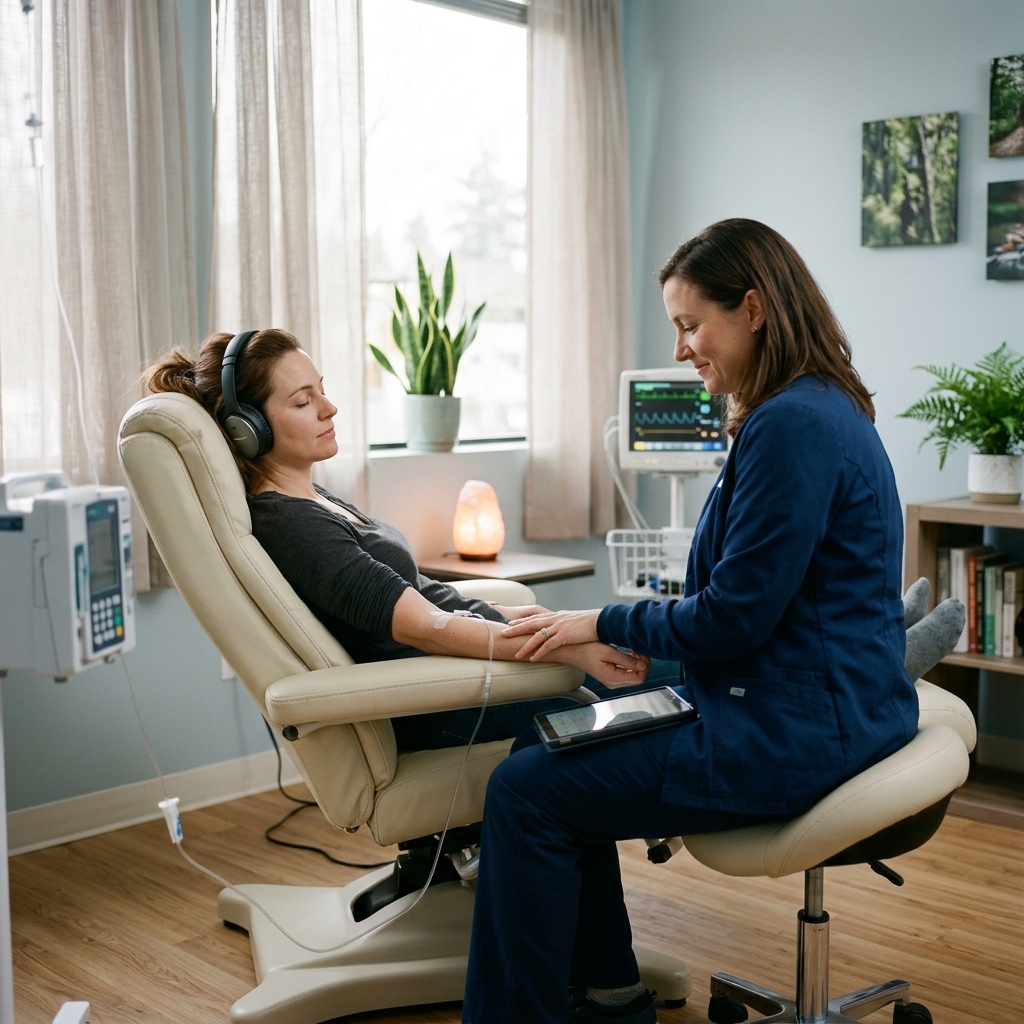
Fresh Start Ketamine confirms both conditions as treatment indications, and the clinic’s published content cites the Grunebaum 2018 findings as part of its clinical framework. Treatment occurs in a fully monitored clinical setting in Raleigh, NC, with dosing based on a comprehensive intake evaluation for each person. Ketamine for depression treatment stays a clinically supervised path, guided by trained providers at every step.
A Research-Backed Option Available in Raleigh, NC
Evidence supporting ketamine for depression and its effect on suicidal thoughts continues to grow with each new study. A clinical consultation gives a clear next step for someone who recognizes their own situation in the research above, where suicidal ideation stays present despite ongoing treatment. Fresh Start Ketamine welcomes consultations to explore whether this treatment is a good fit for each person’s history and current care plan.
Anyone in crisis right now should contact 988 before scheduling a consultation. Support stays available every hour of every day through that line.
Frequently Asked Questions
Does this treatment help with suicidal thoughts?
Research shows this treatment may ease suicidal thoughts through a mechanism that works on its own, alongside its broader antidepressant effect. Several studies found that the reduction in suicidal ideation stays present even when accounting for overall mood improvement. This area continues to develop as researchers further study the connection.
How fast does ketamine work for suicidal ideation?
Clinical trials measured a reduction in suicidal ideation starting as early as one hour after a single infusion. This response stood out clearly against placebo across multiple studies. Standard antidepressants often need four to eight weeks to reach a comparable effect.
Is the effect of one ketamine infusion lasting?
A single infusion produces an effect that lasts from days to a few weeks. Sustained results are built through a full treatment course, such as an initial series followed by maintenance sessions tailored to each person’s response. This structure supports lasting change over time.
Who is this treatment meant for?
This treatment serves adults with treatment-resistant depression who have tried two or more antidepressants with limited response, alongside adults with major depressive disorder facing severe symptoms. Both groups benefit most when suicidal ideation stays present despite ongoing care. A clinical evaluation confirms fitness for each person.
Can this treatment be used without medical supervision?
Ketamine for depression treatment happens best within a fully monitored clinical setting, guided by trained providers. Dosing gets built around a full intake evaluation specific to each person. This supervised structure supports safety throughout every session.
What studies support this research?
Supporting research includes the Grunebaum 2018 trial, a 2021 systematic review in Preventive Medicine, a 2024 meta-analysis of 14 studies in Translational Psychiatry, and a 2023 cohort study following 321,367 patients in the same journal. Each study adds evidence toward ketamine for depression and its fast-acting effect on suicidal thoughts. Together, these studies build a growing evidence base.
What should someone do during a mental health crisis?
Anyone experiencing a mental health crisis or thoughts of ending their life should contact 988, the Suicide and Crisis Lifeline, right away. This line stays available every hour of every day through call or text. This article offers education and works alongside, and separate from, immediate crisis support.
Does this treatment address depression itself or only suicidal thoughts?
This treatment addresses both depression and suicidal thoughts as part of one broader effect. Research suggests these outcomes build and strengthen together across a full infusion course. A structured treatment plan supports both goals over time.
Where can someone access this treatment in Raleigh?
Fresh Start Ketamine offers ketamine infusion therapy within a monitored clinical setting in Raleigh, NC. Each treatment plan starts with a full intake evaluation to confirm fit for the person’s history and current care. A consultation opens the path toward this treatment option.
Is this treatment a cure for depression?
This treatment is an option supported by growing research and works best as part of an ongoing care plan guided by a provider. Results vary by person, and a full evaluation helps set expectations early. Fresh Start Ketamine supports this process alongside each person’s care team.